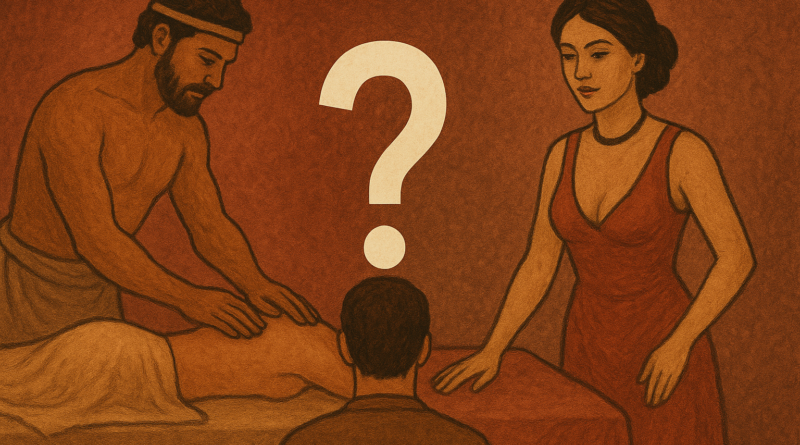
Massage and Prostitution: A Shared History — and the Modern Movement to Redefine the Profession
For thousands of years, massage has existed in a complicated space between healing art and sensual service. In many ancient cultures, skilled touch was an accepted part of medical treatment, ritual cleansing, and physical recovery. But at the same time, massage was often practiced in environments where sexual services were also offered, creating an association that has echoed across history and still challenges the profession today.
A Historical Intertwining
In ancient Greece and Rome, massage was an integral component of health and athletic performance. Physicians and trainers used oils, stretching, and friction techniques to improve circulation, restore muscles, and promote well-being. Yet many of the bathhouses where massage was performed also served as social spaces where erotic services were readily available. The two activities were not always strictly separated.
Similar patterns appeared in parts of Asia and the Middle East. Traditional healing systems—such as Ayurveda in India or Tui Na in China—developed highly sophisticated manual therapies. Still, over the centuries, various establishments offering massage also became places where prostitution was permitted, tolerated, or quietly ignored.
This overlap, spread across continents and generations, created a long-lasting confusion: Was massage a medical skill, a luxury service, or a gateway to something else? The answer depended largely on local culture and legal structures. Unfortunately, the stereotype often leaned toward the most sensational interpretation.
The Shadow on the Modern Profession
When professional massage therapy began to re-emerge in the West during the late 19th and early 20th centuries, the field carried this historical baggage. Many early practitioners fought to separate legitimate therapeutic work from illicit activities. But even today, in many countries, the word “massage” still triggers assumptions or jokes that diminish the professionalism and training behind real therapeutic practice.
This stigma affects everyone in the field:
– Educators struggle to attract serious students when the public misunderstands the profession.
– Therapists face safety concerns or inappropriate requests that undermine their work.
– Clinics and schools must constantly clarify that they adhere to strict ethical guidelines.
The challenge isn’t just reputational—it has practical consequences for licensing, insurance, regulation, and public perception.
A Global Effort to Create a New Image
Today’s leaders within the massage industry are more united than ever in their mission to elevate the profession and erase outdated associations. Across the world, organizations, schools, and practitioners are working to redefine the identity of massage therapy through:
1. Higher education standards
Comprehensive anatomy, pathology, and technique training makes it clear that massage is a skilled therapeutic discipline—not entertainment.
2. Ethical codes and professional licensing
Clear boundaries, codes of conduct, and national regulations help draw a firm line between therapeutic practice and any form of sexual service.
3. Public education
Podcasts, conferences, and professional associations now work to inform the public about the science of touch, pain relief, and bodywork.
4. International collaboration
Leaders from different countries increasingly share best practices to strengthen the global standard for massage therapy.
5. Visible role models
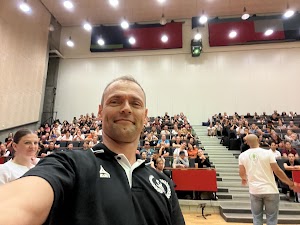
Professional instructors, world-class therapists, and international competition judges help redefine what a modern massage expert looks like.
Reclaiming the True Purpose of Massage
Massage therapy has always had the potential to heal, restore, and support the human body. That purpose is just as relevant now as it was in ancient times—perhaps more so, given modern stress levels and sedentary lifestyles.
By acknowledging the complicated history while firmly establishing ethical and educational standards, today’s massage leaders are helping the profession step into a new era. One where massage is respected for what it truly is: a legitimate therapeutic science, a skilled craft, and a vital part of holistic health.
- Article by IMA Founder Jeppe Tengbjerg
Did you like the article? Or did you like taking part of the World Championship in Massage or one of our classes, then please feel free to give us a nice review on Google.

Please follow the IMA Social Medias and find ongoing Inspiration: Facebook, Instagram, Youtube, TikTok, Telegram Channel, Whatsapp Channel, Threads, X, Linkedin
At the International Massage Association we are ongoing try to elevate the Massage Profession via our many Articles, Podcasts, Masterclasses and via the Educational Conference at the World Championship in Massage.