
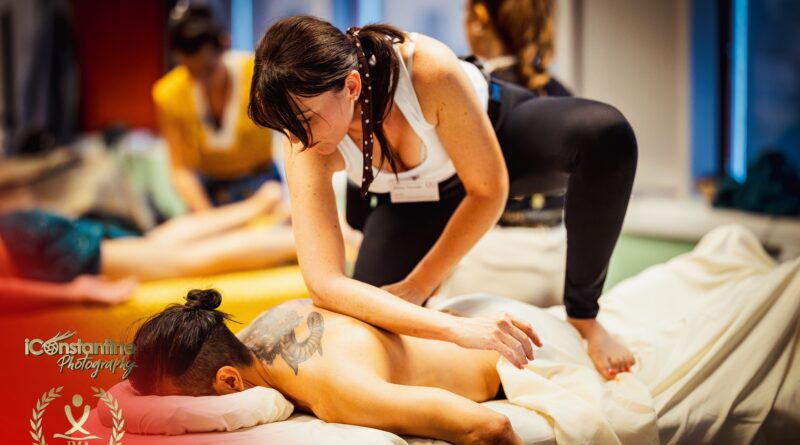
Massage Speed – How Fast Should You Work on Muscles, Tendons, Fascia, and Connective Tissue?
The speed of massage strokes plays a crucial role in how the body responds to treatment. It’s not just about how fast the hands move across the skin, but about how the underlying tissues—muscles, tendons, fascia, and connective tissue—are influenced. The tempo of your movements determines whether the treatment stimulates, calms, loosens, or strengthens the tissue.
1. Speed and Tissue Type – The Fundamental Principles
Muscles
Muscles are made up of contractile fibers that react quickly to both mechanical and neurological stimulation.
- Slow movements help to relax, calm, and increase blood circulation in deeper muscle layers.
- Fast movements stimulate the nervous system and are ideal for warming up or activating muscles before physical activity.
Rule of thumb: The deeper the muscle lies, the slower and more controlled your movements should be. This allows your pressure to reach the tissue effectively without causing resistance or tension.
Tendons
Tendons have a low metabolism and respond more slowly than muscles. They do not tolerate rapid or friction-heavy strokes, which can easily irritate the tissue.
- Treatment should be slow, short in range, and controlled, often using cross-fiber friction to stimulate blood flow and healing.
- Moving too quickly over a tendon may cause micro-irritation rather than repair.
Recommendation: Gentle, repeated movements of about 1–3 cm per second – never fast gliding over the tendon.
Fascia and Connective Tissue
The fascia – the body’s vast web of connective tissue – responds best to slow, sustained pressure and stretch. If the movement is too quick, the fascia simply slides away under your hands without releasing tension.
- Slow, continuous movements (0.5–2 cm per second) allow the fascia to reorganize and release restriction.
- The goal is not pressure, but time and direction.
Fascial work requires patience – the tissue changes slowly, but the results are deep and long-lasting.
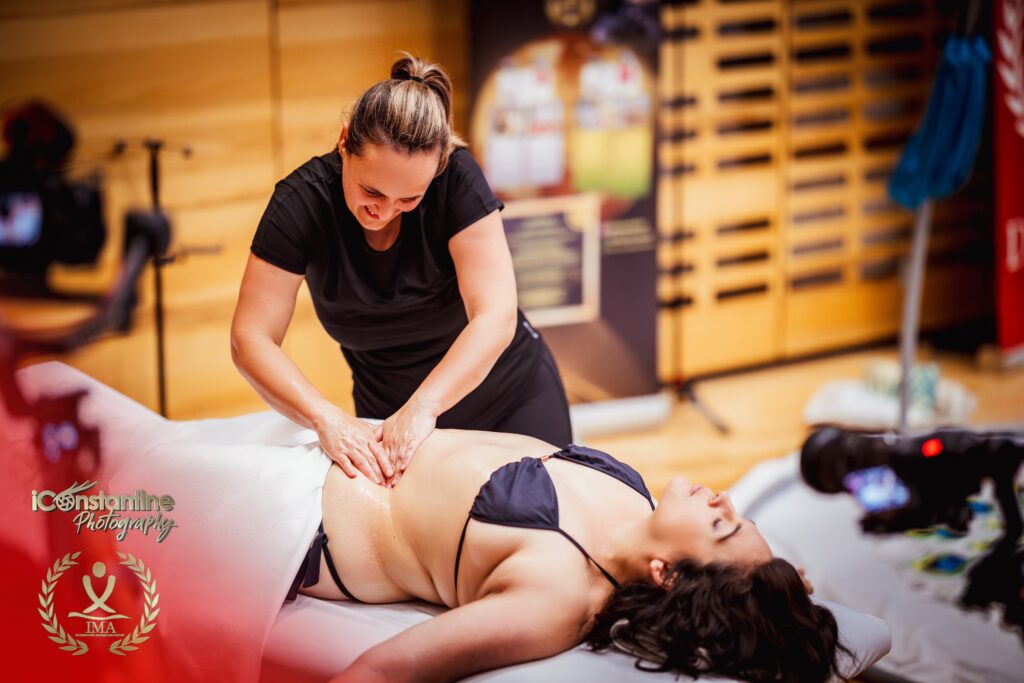
2. Speed in Relation to Muscle Depth
| Tissue Depth | Movement Speed | Main Purpose | Example |
| Superficial muscles (e.g., trapezius, deltoid) | Moderate speed (3–5 cm/sec) | Increase circulation, gentle relaxation | Classic effleurage strokes |
| Intermediate muscles (e.g., quadriceps, latissimus dorsi) | Slow speed (2–3 cm/sec) | Release tension, lengthen tissue | Slow petrissage, deep strokes |
| Deep muscles (e.g., psoas, gluteus medius) | Very slow speed (1 cm/sec or less) | Deep release, neurological calm | Trigger point or myofascial work |
| Tendons and fascia | Extremely slow speed (0.5–2 cm/sec) | Increase elasticity, promote mobility | Fascial stretch, cross-fiber friction |
3. Speed and the Nervous System
Massage speed also influences the autonomic nervous system:
- Slow tempo → activates parasympathetic responses → relaxation, reduced heart rate, and deeper breathing.
- Fast tempo → activates sympathetic responses → alertness, energy, and increased circulation.
This means faster strokes are useful before sports or activity, while slower strokes are ideal for recovery, pain relief, and stress reduction.
4. Practical Guidelines for Therapists
- Always start faster and more superficial, then gradually go slower and deeper as the tissue warms up.
- Observe the client’s breathing, facial expression, and muscle tone – they show whether the tempo suits their body.
- Combine speed, pressure, and direction for the best therapeutic effect.
Conclusion
Massage speed is not random – it is a precise tool for communicating with the body’s tissues.
Slow, mindful movements reach deeper layers and create lasting change, while faster techniques stimulate and awaken the body. A skilled massage therapist learns to adapt tempo to the type of tissue, its depth, and the client’s current needs – that’s where massage becomes both art and science.
- Article by IMA Founder Jeppe Tengbjerg
Did you like the article? Or did you like taking part of the World Championship in Massage or one of our classes, then please feel free to give us a nice review on Google.

At the International Massage Association we are ongoing try to elevate the Massage Profession via our many Articles, Podcasts, Masterclasses and via the Educational Conference at the World Championship in Massage
Please follow the IMA Social Medias and read more articles and watch amazing videos: Facebook, Instagram, Youtube, TikTok, Telegram Channel, Whatsapp Channel, Threads, X, Linkedin