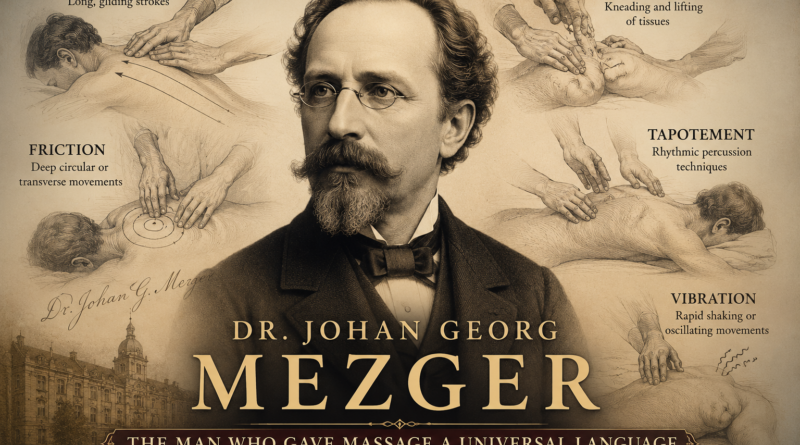
The Man Who Gave Massage a Universal Language – Dr. Johan Georg Mezger
- Article by IMA Founder Jeppe Tengbjerg
For centuries, massage had been practiced in many cultures. Ancient China, India, Egypt, Greece, and Rome all developed their own traditions. Later, pioneers like Per Henrik Ling helped shape the scientific understanding of movement and manual therapy.
Yet there was one major problem.
There was no common language.
Every country used different names, different techniques, and different teaching methods. This made it difficult for therapists to learn from one another and for massage to gain recognition as a serious healthcare profession.
That began to change thanks to a Dutch physician named Dr. Johan Georg Mezger (1838–1909).
Giving Massage a Scientific Vocabulary
Mezger did not invent massage.
Instead, he organized it.
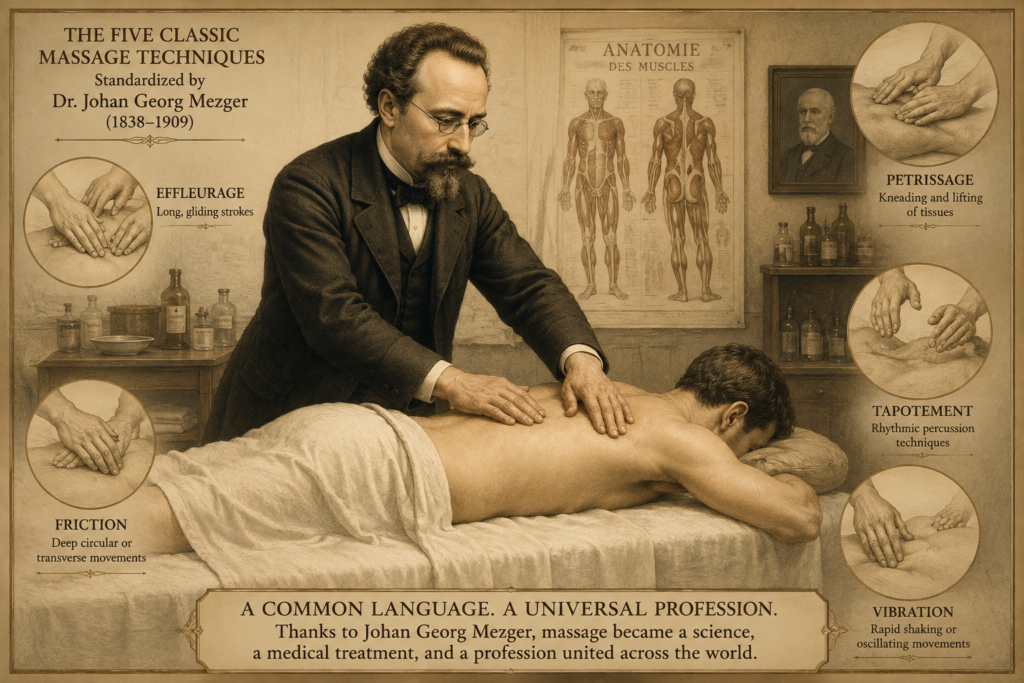
He adopted French terminology—then the international language of medicine—and standardized the names of the most important massage techniques. These are terms that massage therapists still learn today:
- Effleurage – long, gliding strokes
- Petrissage – kneading and lifting of tissues
- Friction – deep circular or transverse movements
- Tapotement – rhythmic percussion techniques
- Vibration – rapid shaking or oscillating movements
For the first time, therapists across Europe could speak the same professional language.
From Folk Practice to Medical Treatment
Mezger also insisted that massage should be based on anatomy, physiology, and careful clinical observation.
He successfully treated patients with joint disorders, muscle injuries, and musculoskeletal pain, gaining the respect of physicians who had previously viewed massage with skepticism.
As a result, massage gradually moved from homes and traditional healers into hospitals, rehabilitation clinics, and medical education.
This transformation laid the foundation for modern evidence-based massage therapy.
Why Mezger Still Matters Today
Nearly every massage school in the world teaches the terminology introduced by Johan Mezger.
Whether you study Swedish Massage, Sports Massage, Clinical Massage, or Myofascial Therapy, you are almost certainly using his vocabulary every day—even if you have never heard his name.
His greatest contribution was not creating new techniques.
It was creating a common professional language that united therapists around the world.
The Legacy Lives On
Today, the massage profession continues to evolve through research, education, and international collaboration.
Organizations like the International Massage Association build on this legacy by bringing therapists from different countries together through education, certification, and international competitions.
Just as Mezger united therapists with a shared language, today’s global massage community is creating shared standards that raise the profession to new heights.
Did you like the article? Or did you like taking part of the World Championship in Massage or one of our classes, then please feel free to give us a nice review on Google.
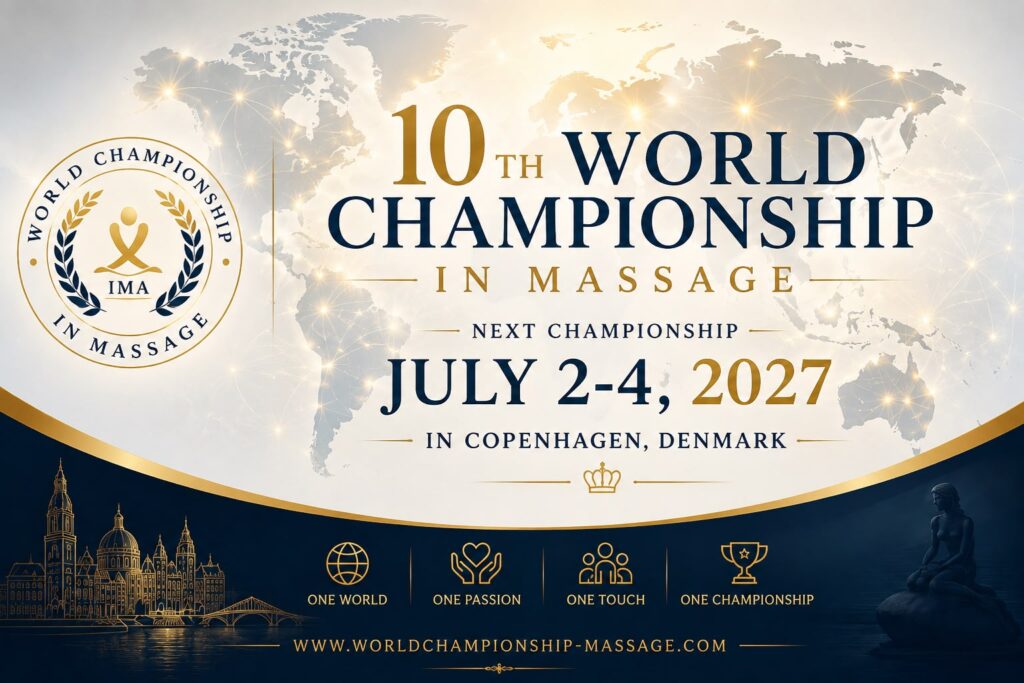
Please follow the IMA Social Medias and find ongoing Inspiration: Facebook, Instagram, Youtube, TikTok, Telegram Channel, Whatsapp Channel, Threads, X, Linkedin
At the International Massage Association we are ongoing try to elevate the Massage Profession via our many Articles, Podcasts, Masterclasses and via the Educational Conference at the World Championship in Massage.