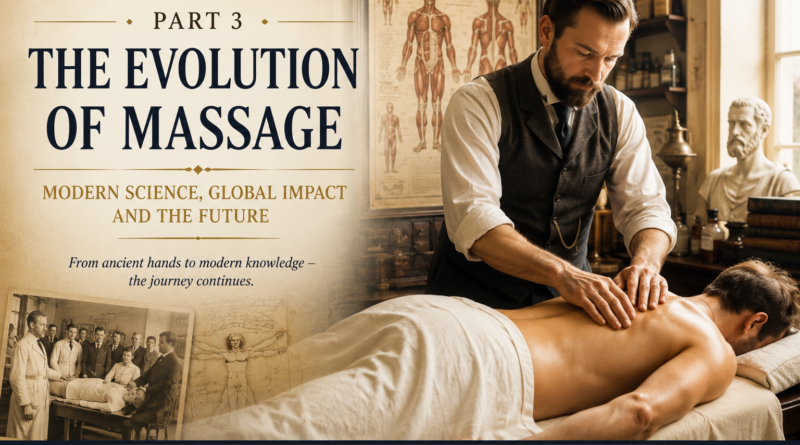
The Father of Modern Massage? Meet Per Henrik Ling
“Massage did not become a profession overnight. It became a science when one man asked a simple question: What if movement could heal?”
Throughout history, massage had been practiced by healers, monks, athletes, and families. It existed in countless cultures, often passed down through experience rather than formal education.
But in the early 1800s, something changed.
For the first time, massage and therapeutic movement were organized into a structured system based on anatomy, physiology, and observation.
That man was Per Henrik Ling.
Who Was Per Henrik Ling?
Born in Sweden in 1776, Ling was fascinated by the human body’s ability to recover through movement.
He was not originally a massage therapist.
He was a teacher, linguist, fencing master, and gymnast.
After experiencing his own physical problems, he became convinced that carefully designed movement could restore health.
Instead of relying only on medication, Ling believed the body itself possessed remarkable healing abilities when guided correctly.
This philosophy became known worldwide as the Swedish Movement System.
More Than Massage
Many people mistakenly believe Ling invented Swedish massage.
He did not.
Instead, he created an entire therapeutic system consisting of four areas:
- Educational gymnastics
- Military gymnastics
- Medical gymnastics
- Aesthetic gymnastics
Within medical gymnastics, manual techniques—including massage—became important tools for restoring function.
Massage was never intended to stand alone.
It was part of a complete rehabilitation approach that combined movement, stretching, joint mobilization, posture correction, and manual treatment.
This holistic thinking was revolutionary for its time.
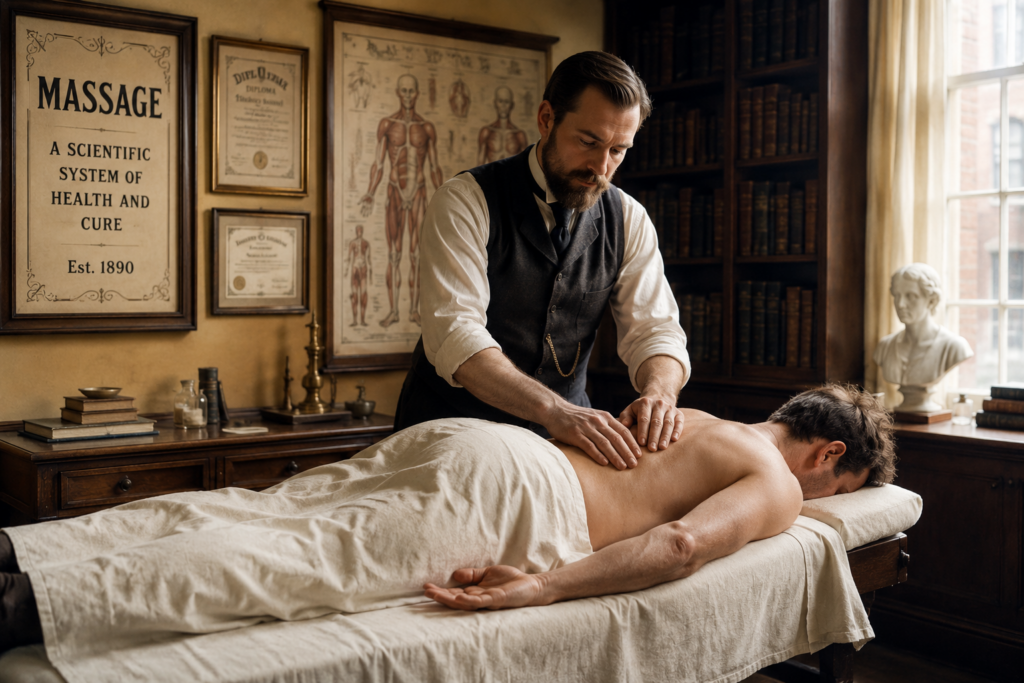
The Royal Central Institute
In 1813, Ling founded the Royal Central Institute of Gymnastics in Stockholm.
Here, students were trained in anatomy, physiology, therapeutic exercise, and manual techniques.
For perhaps the first time in history, massage was being taught within a structured educational framework rather than through apprenticeship alone.
This helped transform massage from a traditional healing art into a respected clinical discipline.
A Global Influence
As Ling’s students traveled throughout Europe, they brought his methods with them.
Doctors, physiotherapists, and massage practitioners adapted and expanded the techniques.
Eventually, these ideas spread across the world.
Many modern massage schools still teach principles that can be traced back to Ling’s work—even if students don’t realize it.
His influence extends beyond massage into physiotherapy, rehabilitation, sports medicine, and athletic training.
Did Ling Invent Swedish Massage?
This question is debated among historians.
The massage techniques commonly called “Swedish massage” today were largely developed and refined by later practitioners, especially Dutch physician Johann Georg Mezger, who introduced many of the French terms still used today:
- Effleurage
- Petrissage
- Friction
- Tapotement
Ling laid the scientific and educational foundation.
Others helped shape the practical massage techniques that became famous worldwide.
History is rarely the work of one individual.
It is usually built by many people over generations.
Why This Matters Today
Every massage therapist who studies anatomy, evaluates posture, considers biomechanics, or combines movement with manual therapy is continuing a tradition that Ling helped establish more than 200 years ago.
Modern massage competitions also reflect his philosophy.
Judges don’t simply evaluate relaxation.
They assess technique, body mechanics, anatomical understanding, therapeutic intention, and professional execution.
These principles echo the educational standards Ling championed in the early nineteenth century.
Looking Ahead
The story of massage doesn’t end in Sweden.
In the next chapter, we’ll meet the physician who helped transform Swedish massage into an internationally recognized medical treatment—and introduced the terminology that therapists still use today.
History is about to become even more fascinating.
Did you know that the names of massage techniques like “effleurage” and “petrissage” were not created by Per Henrik Ling?
We’ll uncover that story next.
Did you like the article? Or did you like taking part of the World Championship in Massage or one of our classes, then please feel free to give us a nice review on Google.