
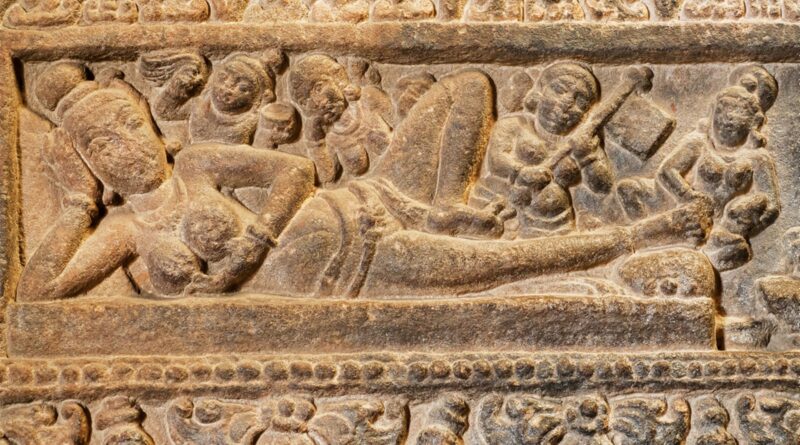
Royal or Divine Woman Receiving a Foot Massage – Ancient Indian Stone Relief
Title: Royal or Divine Woman Receiving a Foot Massage – Ancient Indian Stone Relief
Origin: India
Period: Likely between 9th–12th century CE (Chola or similar South Indian dynasty)
Material: Carved sandstone or granite
Style: Temple relief sculpture
Description:
This exquisite stone relief captures an intimate and culturally significant moment: a reclining noble or divine woman receiving a foot massage from attendants. The composition reveals a graceful figure lounging in repose, supported by pillows, while several attendants (possibly maidservants or celestial beings) gather around her—one clearly massaging her foot, another holding tools or possibly fragrant oils.
The setting, framed by floral and geometric borders, suggests this may be a palace or divine abode, placing the scene in a sacred or royal context. The style of the carving, including the ornamentation and attire, points toward classical South Indian temple art, where such depictions often celebrated sensuality, ritual care, and spiritual symbolism.
Cultural and Historical Significance:
Massage in ancient India was not merely for relaxation; it was deeply embedded in ritualistic, medical (Ayurvedic), and spiritual practices. Scenes like this were common in temple art to reflect the pleasures of royal life, divine leisure, or the ideal of seva (service), often given to gods, royalty, or spiritual icons.
This image may also represent a goddess or celestial woman (such as an apsara) being attended to, emphasizing the reverence toward the female form and the culturally accepted act of bodily care as part of devotion and wellbeing. Massage in this context becomes a symbol of respect, service, and luxury.
Massage in Ancient Indian Tradition:
Ayurveda, India’s ancient science of life and healing, has long emphasized abhyanga (oil massage) as a daily ritual for health and longevity. This sculpture reflects the cultural normalization and celebration of massage, not just as therapy, but as a refined act of love, devotion, and dignity.
Museum Note:
This artifact is a powerful testament to how massage was honored in ancient Indian society—not merely for its physical benefits, but for its cultural and symbolic depth. Whether divine or human, the receiver of the massage is portrayed with grace and ease, reminding us of massage’s historical role in both healing and honoring the body.

Do you like our Massage Museum? Or did you like taking part of the World Championship in Massage or one of our classes, then please feel free to give us a nice review on Google. Perhaps learn more about Ayurvedic massage here
Please follow the IMA Social Medias and find ongoing Inspiration: Facebook, Instagram, Youtube, TikTok, Telegram Channel, Whatsapp Channel, Threads, X, Linkedin
At the International Massage Association we are ongoing try to elevate the Massage Profession via our many Articles, Podcasts, Masterclasses and via the Educational Conference at the World Championship in Massage.