From Local Traditions to a Global Profession – The International Rise of Massage
- Article by IMA Founder Jeppe Tengbjerg
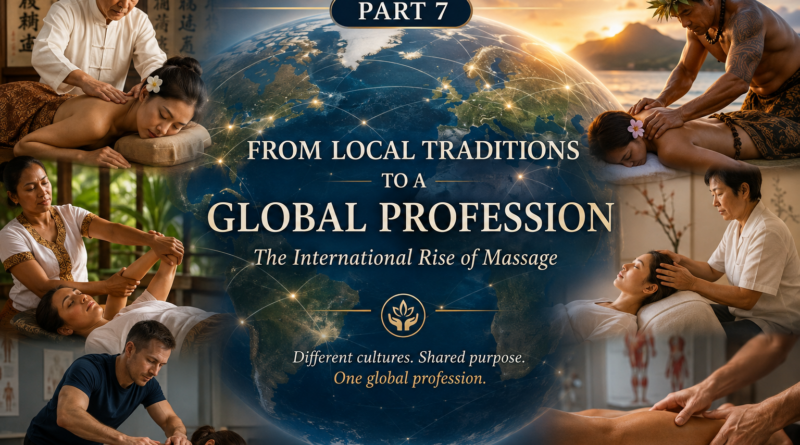
For thousands of years, massage developed within local cultures. Chinese physicians, Indian Ayurvedic practitioners, Japanese therapists, Swedish movement educators, and countless traditional healers each built systems based on their own philosophies and observations.
For centuries these traditions remained largely separated.
Then something remarkable happened.
During the twentieth century—and especially during its second half—the world became increasingly connected. Air travel became accessible, international conferences emerged, scientific journals crossed borders, and therapists began learning from colleagues on the other side of the planet.
Massage was no longer simply a local tradition.
It was becoming a global profession.
A World Ready to Share Knowledge
Following the Second World War, healthcare expanded rapidly across much of the world.
Physiotherapists, physicians, nurses, chiropractors, osteopaths, sports scientists, and massage therapists increasingly collaborated in rehabilitation and patient care.
At the same time, tourism exposed millions of people to unfamiliar treatment traditions.
A visitor to Thailand discovered Thai Massage.
A traveler in Hawaii experienced Lomi Lomi.
Visitors to China encountered Tui Na.
Japan introduced Shiatsu to a wider audience.
Each tradition carried unique philosophies, but therapists soon realized they all shared one fundamental purpose:
Helping people feel and function better.
Education Changed Everything
Earlier generations often learned massage through apprenticeships.
Knowledge was passed from teacher to student, sometimes within families.
Modern education transformed this model.
Structured schools introduced anatomy, physiology, pathology, ethics, hygiene, communication, and evidence-based practice alongside practical techniques.
Students no longer learned only how to perform massage.
They also learned why it worked, when it should be used, and when it should not.
This professional education increased public trust and elevated massage from a practical skill to a respected healthcare discipline in many countries.
Science Entered the Conversation
Perhaps the greatest transformation came when researchers began asking scientific questions about massage.
Could massage reduce pain?
Does it influence stress hormones?
Can it improve circulation?
Does it help athletes recover?
Can it support mental wellbeing?
Universities and hospitals gradually began studying these questions.
Not every traditional claim could be confirmed.
Some long-held beliefs were challenged.
Others received encouraging scientific support.
The profession learned an important lesson:
Tradition and science do not have to compete.
Instead, they can strengthen one another.
Traditional experience inspires new research.
Research helps refine traditional practice.
Together they create better care for patients and clients.
The Birth of International Collaboration
As communication improved, massage professionals increasingly looked beyond their own borders.
International conferences allowed therapists to exchange ideas.
Teachers travelled across continents.
Books were translated into new languages.
Professional networks expanded.
For perhaps the first time in history, a therapist in Europe could learn directly from a teacher in Asia, while an American educator could study Scandinavian rehabilitation techniques.
The profession became richer because knowledge flowed in every direction.
No single country possessed all the answers.
Every culture contributed something valuable.
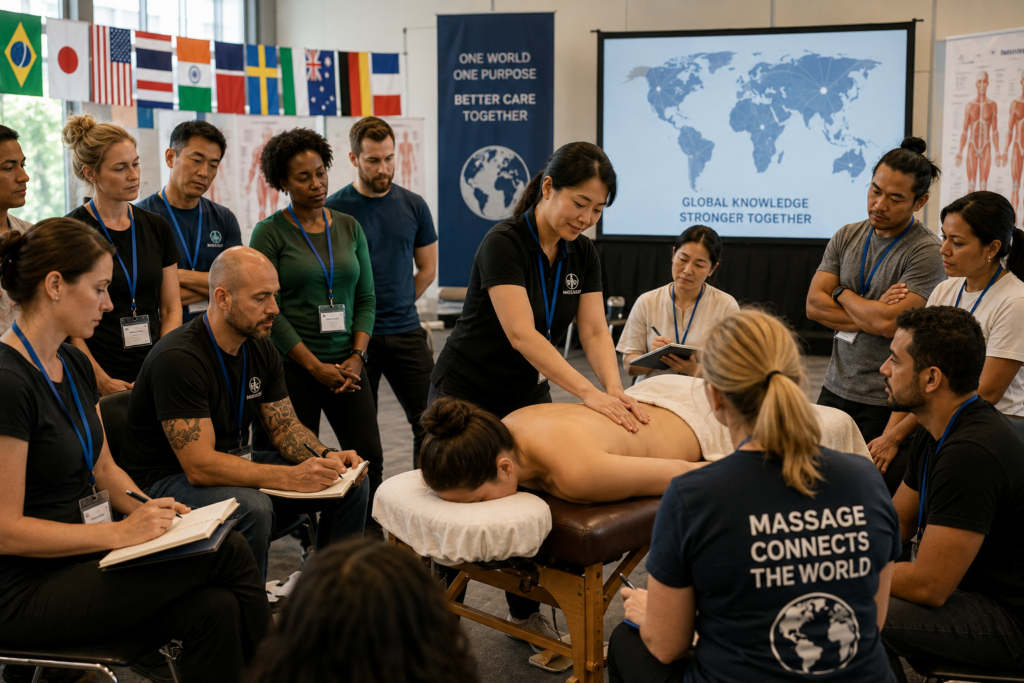
A Profession with Many Voices
Modern massage is wonderfully diverse.
Sports massage.
Clinical massage.
Medical massage.
Thai Massage.
Shiatsu.
Lomi Lomi.
Myofascial techniques.
Trigger point therapy.
Lymphatic treatments.
Relaxation massage.
Instead of replacing one another, these approaches have increasingly learned to coexist.
Each serves different people, different goals, and different healthcare settings.
The strength of modern massage lies not in uniformity—but in diversity built upon professional standards.
Looking Beyond Technique
Today’s best therapists understand that excellent massage involves far more than skilled hands.
It requires communication.
Professional ethics.
Critical thinking.
Lifelong learning.
Respect for cultural traditions.
Understanding scientific evidence.
Empathy.
The profession has matured from simply asking:
“Which technique is best?”
to asking:
“What does this individual client need today?”
That shift represents one of the greatest advances in massage history.
A New Era Begins
As massage entered the twenty-first century, another transformation was waiting.
The internet connected therapists instantly.
Online education became possible.
Videos, webinars, research databases, and international communities removed geographical barriers almost overnight.
A therapist in Brazil could learn from a teacher in Denmark.
An instructor in Australia could educate students in Canada.
Global collaboration accelerated faster than ever before.
The history of massage was no longer being written by isolated pioneers.
It was being written collectively by thousands of professionals working together across the world.
And that story is still unfolding.
Coming in Part 8
Massage has become more connected than at any other point in history.
But with global growth comes a new challenge:
How do we create shared professional standards while respecting the diversity that makes massage so unique?
In Part 8, we explore the emergence of international organizations, global education, professional competitions, and the movement toward worldwide recognition of massage as a respected profession.
Did you like the article? Or did you like taking part of the World Championship in Massage or one of our classes, then please feel free to give us a nice review on Google.
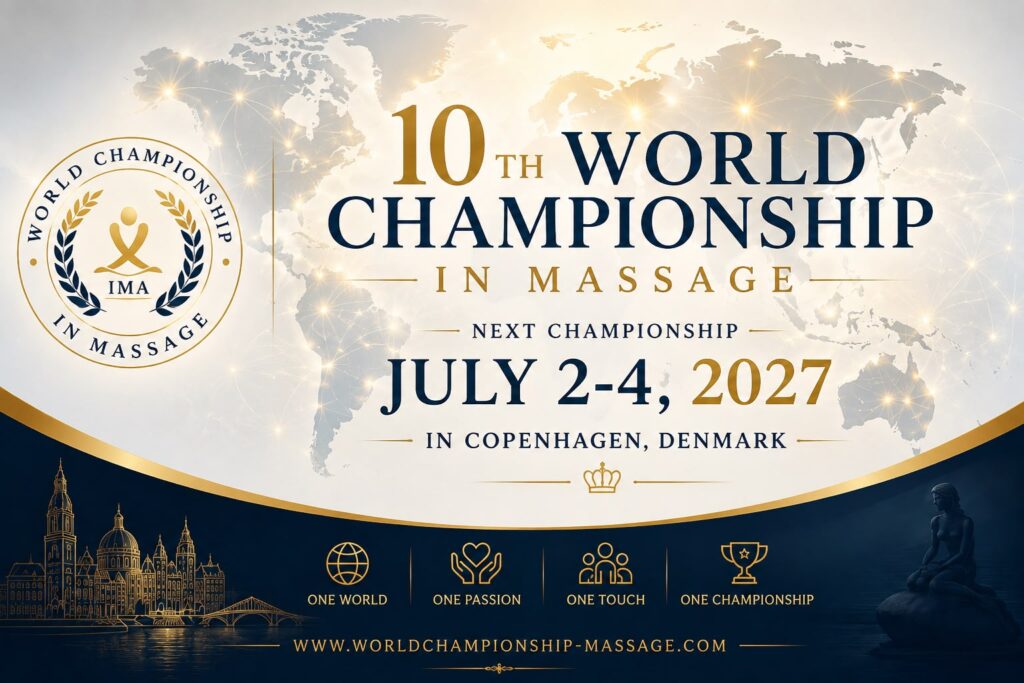
Please follow the IMA Social Medias and find ongoing Inspiration: Facebook, Instagram, Youtube, TikTok, Telegram Channel, Whatsapp Channel, Threads, X, Linkedin
At the International Massage Association we are ongoing try to elevate the Massage Profession via our many Articles, Podcasts, Masterclasses and via the Educational Conference at the World Championship in Massage.