From Local Practice to a Global Profession
- Article by IMA Founder Jeppe Tengbjerg
For thousands of years, massage developed independently across civilizations. Chinese physicians refined therapeutic techniques, Indian practitioners integrated massage into Ayurveda, Egyptian healers used oils and manual therapies, while Greek and Roman physicians connected massage with medicine and athletics.
Later, pioneers such as Per Henrik Ling and Johan Georg Mezger helped transform massage into a more systematic profession in Europe. Schools emerged, textbooks were written, and treatment methods became increasingly standardized.
Yet despite these advances, massage remained largely a local profession.
Each country developed its own education, terminology, treatment philosophy, and professional organizations. While knowledge continued to spread, there was little international cooperation. A therapist trained in one country often knew very little about the methods practiced elsewhere.
Different Countries – Different Traditions
During the twentieth century, massage evolved in many different directions.
In some countries, massage became closely linked with physiotherapy and rehabilitation.
Elsewhere, it developed through spa traditions, wellness tourism, sports medicine, or complementary healthcare.
New techniques also emerged:
- Sports Massage
- Myofascial Release
- Trigger Point Therapy
- Lymphatic Drainage
- Thai Massage
- Shiatsu
- Lomi Lomi
- Medical Massage
- Deep Tissue Massage
Each method contributed valuable knowledge to the profession.
However, they also created divisions.
Instead of viewing massage as one broad profession with many specialties, therapists often identified only with their own technique or educational background.
The Missing International Community
Unlike many other professions, massage had no worldwide platform.
Doctors have international congresses.
Physiotherapists have global organizations.
Athletes compete in world championships.
Chefs, hairdressers, florists, and countless other professions meet internationally to inspire one another.
Massage therapists rarely had those opportunities.
International cooperation was limited.
Educational standards varied greatly.
Professional recognition depended entirely on where a therapist lived.
As a result, many talented therapists never had the opportunity to share their skills beyond their own country.
The Rise of International Collaboration
The internet changed everything.
Suddenly therapists from different continents could communicate, exchange techniques, discuss research, and learn from one another.
Social media accelerated this development even further.
For the first time in history, a therapist in Brazil could inspire a therapist in Japan.
An educator in Canada could teach students in South Africa.
Ideas began moving faster than ever before.
The profession slowly became global.
But there was still something missing.
Massage needed common meeting places where therapists could meet face to face, exchange experiences, demonstrate techniques, and celebrate professional excellence.
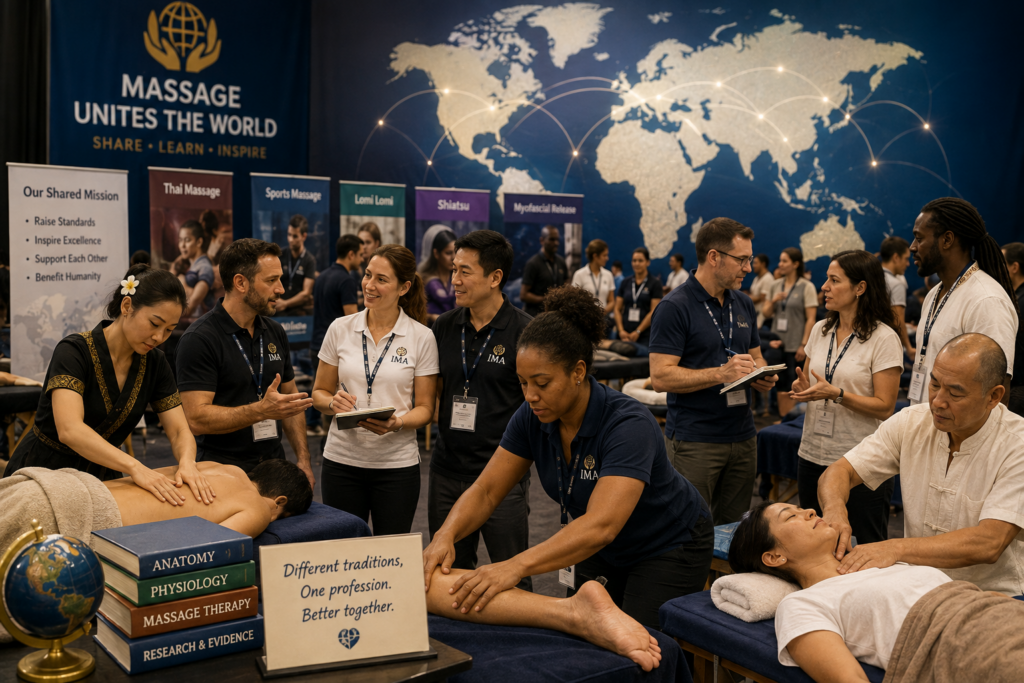
A Profession Begins to Unite
The last decade has seen remarkable progress.
International conferences.
Global online education.
Professional networks.
Research collaborations.
Cross-cultural learning.
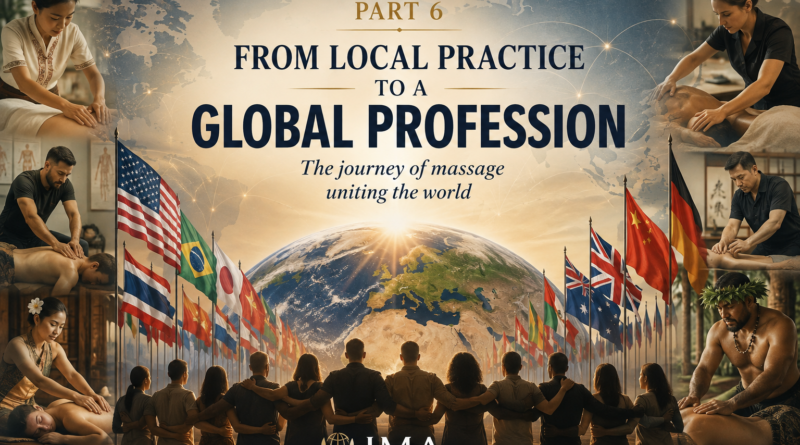
Massage is increasingly viewed not only as a local skill but as an international profession built upon shared knowledge and mutual respect.
This global movement continues to strengthen education, improve treatment quality, and raise professional standards around the world.
The journey is still only beginning.
Looking Ahead
History teaches us that every profession evolves when passionate people choose collaboration over competition.
The future of massage will not be shaped by one country or one technique.
It will be shaped by therapists who are willing to learn from one another, respect different traditions, and continue building bridges across cultures.
In the next chapter, we might explore one of the most significant milestones in this international journey—how massage competitions emerged, why they became important for professional development, and how they helped inspire therapists around the world to pursue excellence.
Did you like the article? Or did you like taking part of the World Championship in Massage or one of our classes, then please feel free to give us a nice review on Google.
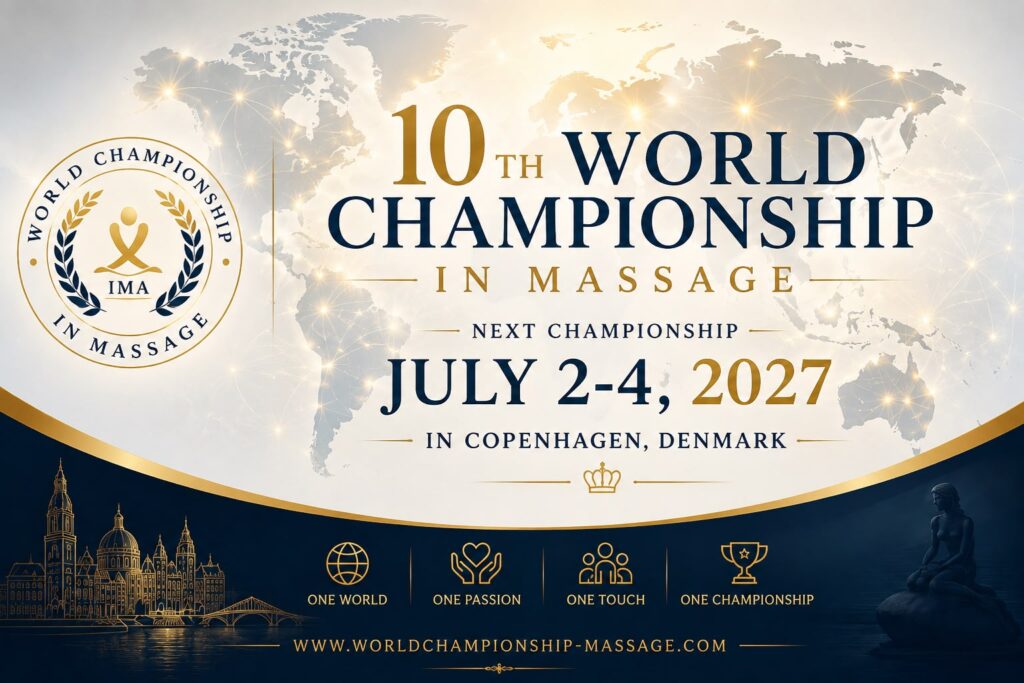
Please follow the IMA Social Medias and find ongoing Inspiration: Facebook, Instagram, Youtube, TikTok, Telegram Channel, Whatsapp Channel, Threads, X, Linkedin
At the International Massage Association we are ongoing try to elevate the Massage Profession via our many Articles, Podcasts, Masterclasses and via the Educational Conference at the World Championship in Massage.