From Master to Profession – How Massage Entered the Hospitals
“One person can create an idea. But only when thousands build upon it does it become a profession.”
- Article by IMA Founder Jeppe Tengbjerg
When the Dutch physician Johan Mezger passed away in 1909, he had already transformed the history of massage.
His techniques were used by some of Europe’s most respected physicians. Royal families, elite athletes, and patients traveled long distances to receive treatment from the man who became known for his remarkable hands. Yet his greatest legacy was not the patients he treated.
It was the therapists he inspired.
Massage Becomes Part of Medicine
By the late nineteenth century, doctors across Europe were beginning to realize that massage could be far more than a relaxing experience.
It could help after surgery.
It could support recovery from injuries.
It could relieve pain.
It could improve stiff joints.
It could assist patients recovering from long illnesses.
As a result, massage gradually became an accepted part of rehabilitation at a time when medical treatment options were still limited.
For the first time, hospitals and clinics began employing practitioners who specialized in manual therapy.
A new profession was being born.
The First Professional Massage Education
Interest in massage grew rapidly.
Schools were established in several countries where future practitioners studied anatomy, physiology, and the classical massage techniques that are still taught today:
- Effleurage
- Petrissage
- Friction
- Tapotement
- Vibration
These five French terms became the international language of classical massage and continue to be recognized around the world.
For the first time, therapists could receive structured education based on shared scientific principles rather than learning only through apprenticeship.
Massage was becoming a profession.
From Europe to the World
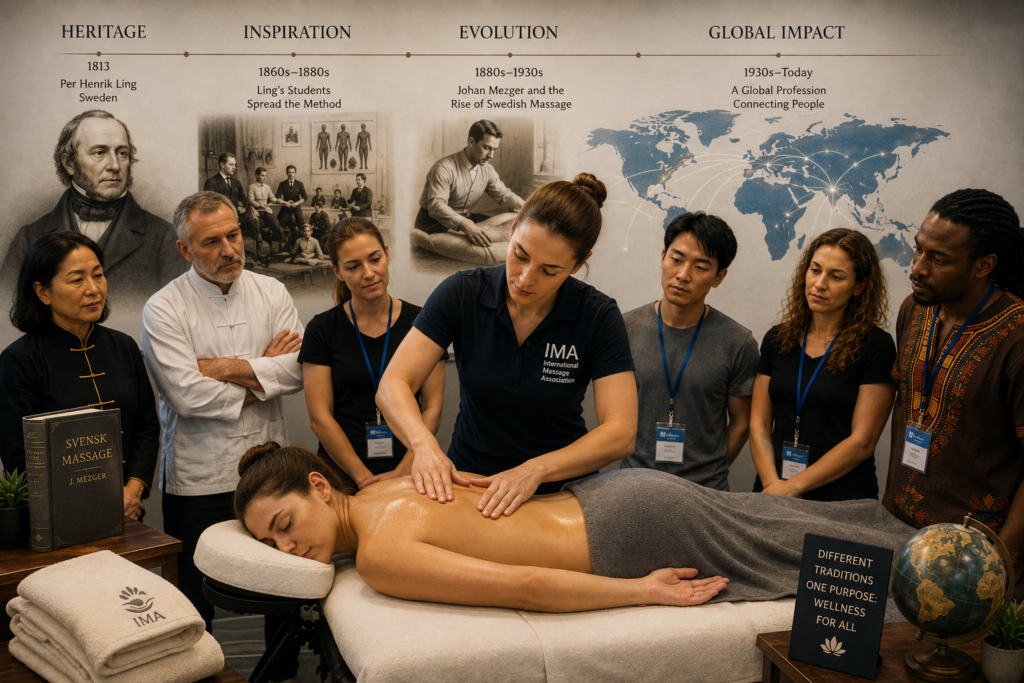
During the early twentieth century, classical massage spread across Europe and beyond.
England embraced it.
Germany expanded it.
France refined it.
Scandinavia incorporated it into healthcare and education.
The United States began developing its own schools and training programs.
Everywhere, new textbooks were published, new educators emerged, and new treatment methods evolved from the foundations laid by Per Henrik Ling and, above all, Johan Mezger.
At the same time, Western massage traditions began interacting with healing practices from other parts of the world. Sports massage evolved. Rehabilitation became more specialized. Manual therapy continued to develop.
Massage was no longer a single technique.
It had become an entire profession.
Then Something Unexpected Happened…
During the first half of the twentieth century, medicine advanced faster than ever before.
X-rays.
Antibiotics.
Modern surgery.
New medical technologies.
Healthcare increasingly focused on scientific and technological breakthroughs. In many hospitals, massage slowly lost its central role as newer treatments became available.
For a time, many believed massage had reached the end of its golden age.
They were wrong.
A new revolution was about to begin.
One that would make massage more popular than ever before.
Did you like the article? Or did you like taking part of the World Championship in Massage or one of our classes, then please feel free to give us a nice review on Google.
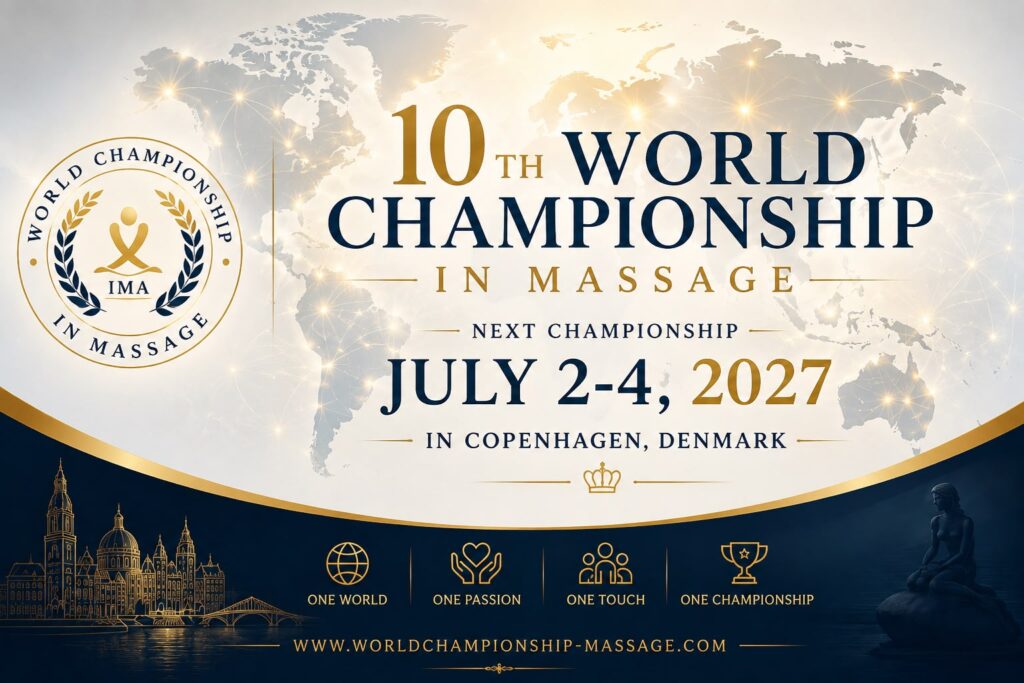
Please follow the IMA Social Medias and find ongoing Inspiration: Facebook, Instagram, Youtube, TikTok, Telegram Channel, Whatsapp Channel, Threads, X, Linkedin
At the International Massage Association we are ongoing try to elevate the Massage Profession via our many Articles, Podcasts, Masterclasses and via the Educational Conference at the World Championship in Massage.